


Construction will always be one of the largest industries in the global economy. According to McKinsey, roughly $10 trillion is spent annually on construction goods and services. The sector employs about 7% of the global workforce and accounts for approximately 13% of world GDP. And it remains one of the least productive and least digitized industries on the planet.
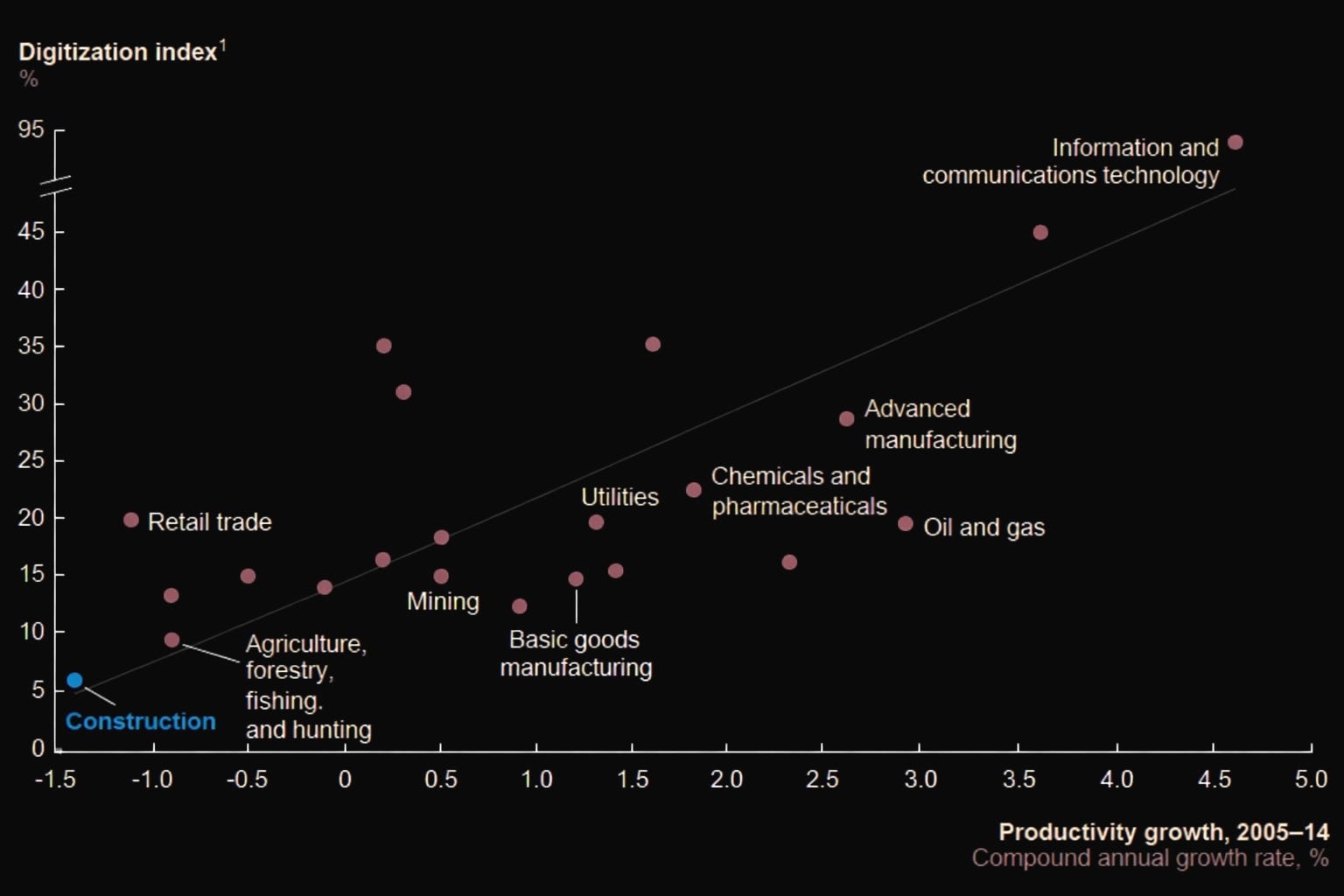
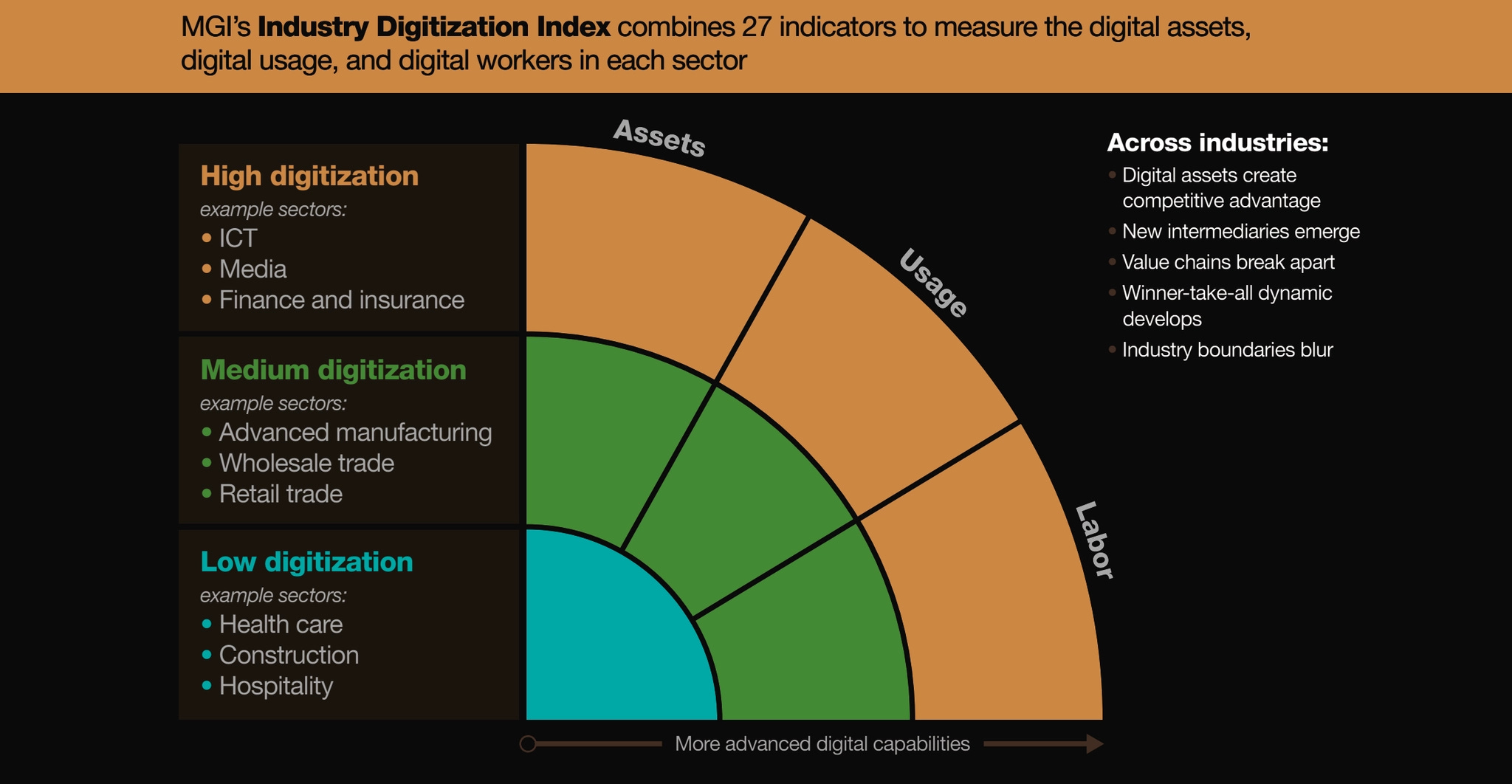
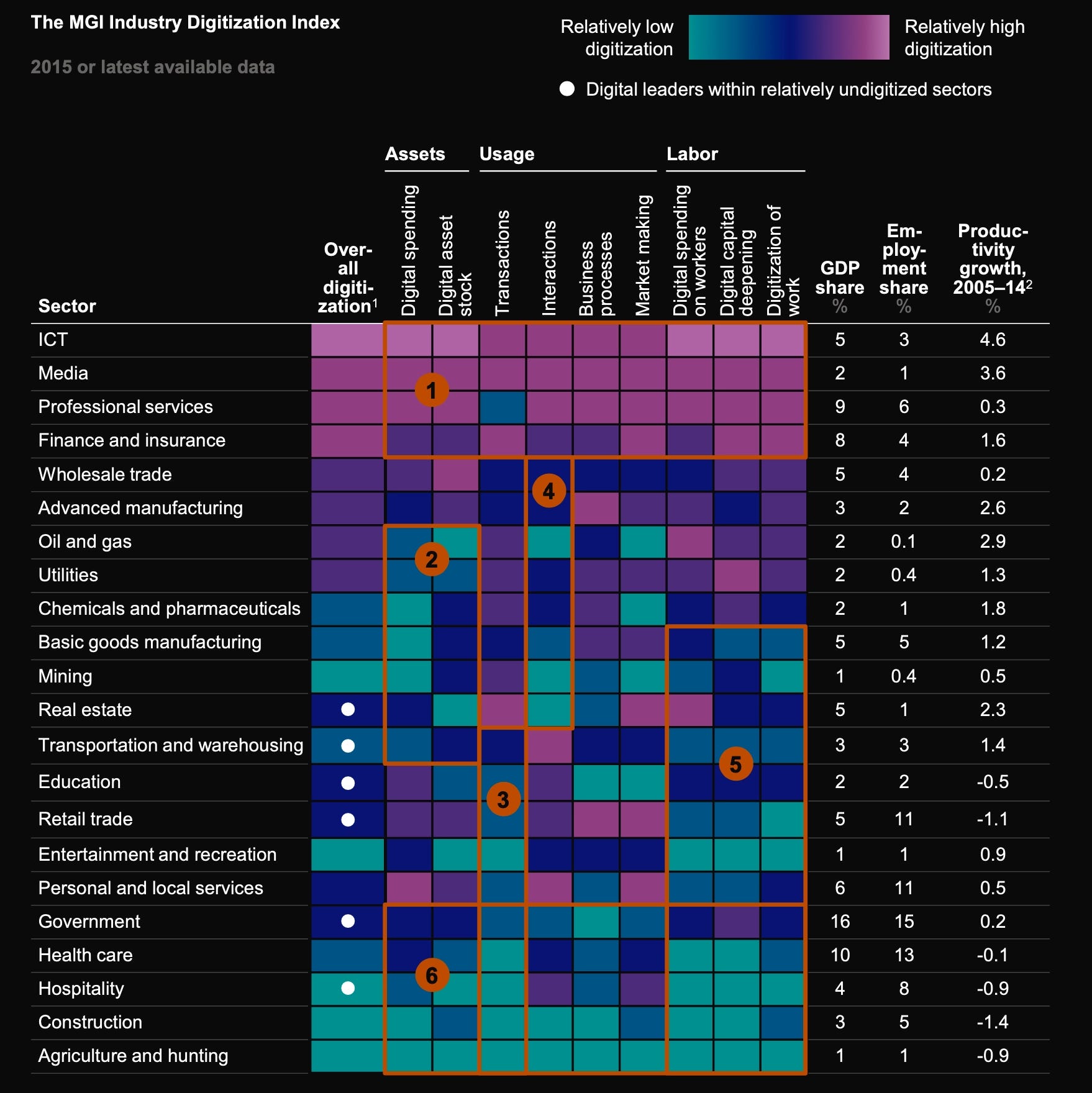
This is not an exaggeration. By the McKinsey Global Institute digitization index, construction ranks second-to-last in the US and last in Europe across all economic sectors. The data is a decade old, but what matters more is the digitization trajectory by sector, because the trajectory itself barely changes over time.
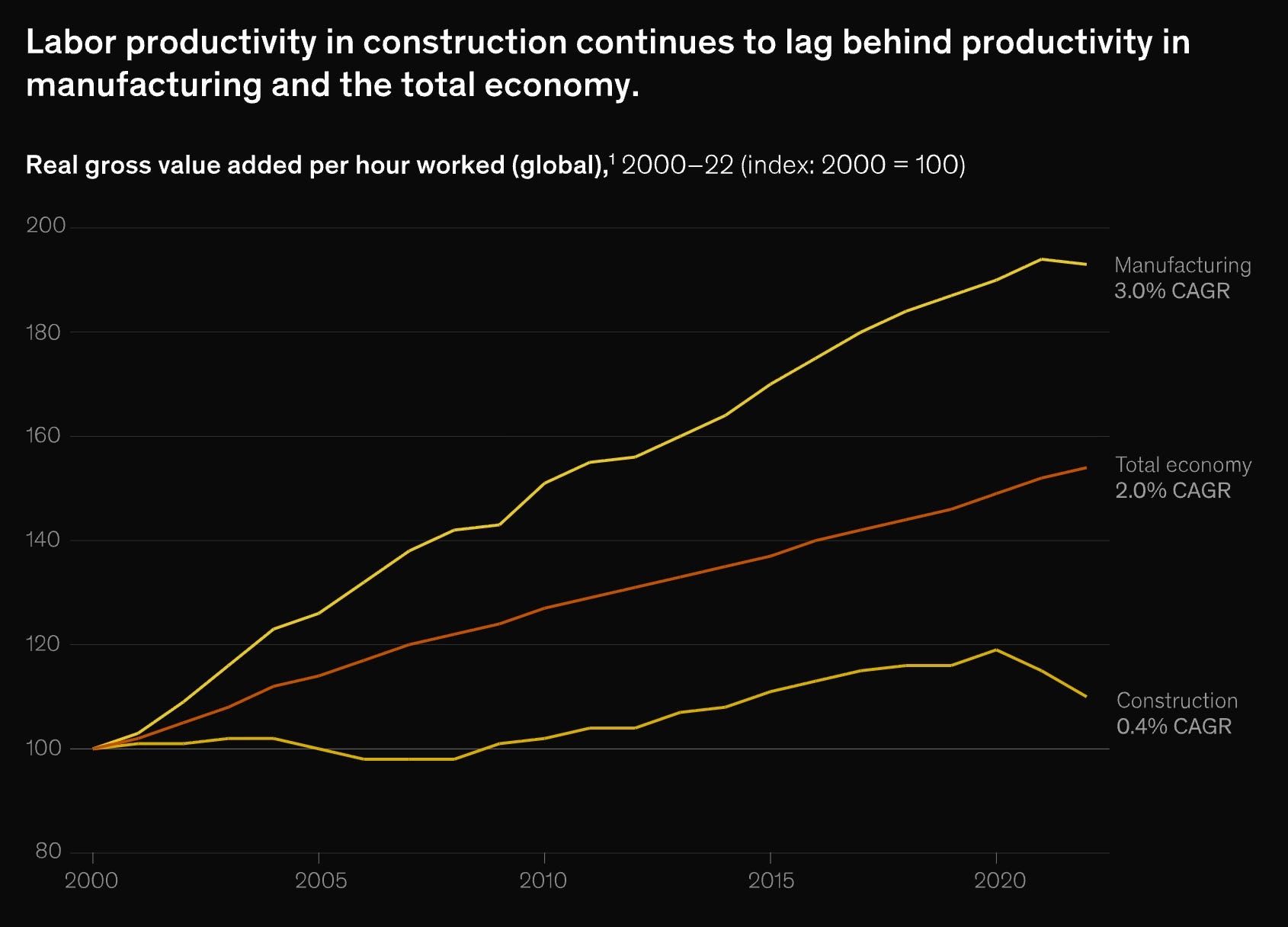
Labor productivity in construction grew just 0.4% per year from 2000 to 2022, compared to 2% for the global economy overall and 3% for manufacturing. In a sample of countries, fewer than a quarter of construction firms managed to match even the broader economy's productivity growth over the past decade. If construction productivity caught up to the economy's average, it would add $1.6 trillion annually and roughly 2% to global GDP.
Think about that number. $1.5 trillion sitting on the ground, and no one can pick it up. This happens because of structural reasons that make construction fundamentally different from the rest of the economy. Every project is unique. You cannot scale the construction of a bridge the way you scale a SaaS product, because the participants are fragmented. The architect, the structural engineer, the MEP engineer, the general contractor, dozens of subcontractors, the client, each working in their own lane with different standards, different file formats, different ideas of what a finished product looks like. Building codes, fire codes, environmental requirements, seismic standards, all of it varies from jurisdiction to jurisdiction.
Below is a McKinsey map of how deeply technology has penetrated construction. It shows that key digital tools already exist and have proven their value, but deployment is fragmented and has not reached scale. The top layer shows solutions that have become standard practice: digital documents and basic project management. Just below are more advanced tools like Building Information Modeling, widely used but still not covering the entire industry. Further down sit technologies with obvious productivity potential (AI, 3D printing, IoT) whose adoption remains selective. And at the very bottom sit robotics, marketplaces, AR/VR, still barely scaled.
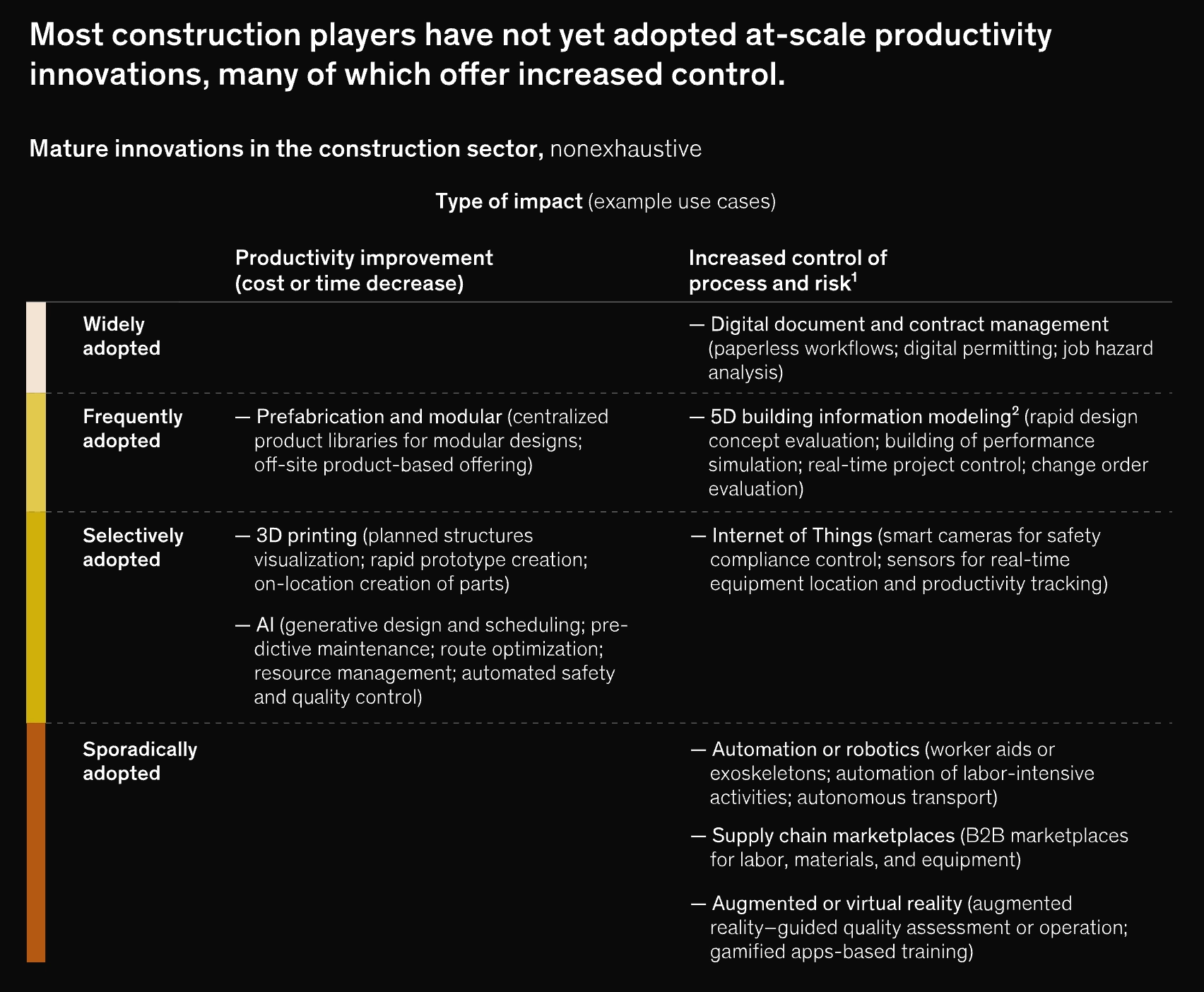
Construction companies have historically spent less than 1% of revenue on IT. That is three times less than automotive or aerospace. And finally, the cost of an error in construction can be a collapsed bridge, a building fire, or a flooded tunnel. The feedback loop in coding might take minutes or hours. In construction it takes years. When Claude Code writes code, you can run it, test it, roll it back. But if an engineer designs a load-bearing structure, you cannot roll it back after the building has been commissioned. These factors create the paradox I will explain below.
Autodesk
I have previously divided software into two types. The first covers deterministic systems like CRM, ERP, and accounting, where absolute accuracy, rule compliance, client data integration, and proven business processes are required. The second covers probabilistic systems, pattern recognition, content generation, and analytics widgets. If AI reproduces those at 90% quality for 10% of the cost, the business collapses.
Autodesk fits neither category. It is software whose output exists not in digital space but in the real world. A building, a bridge, a turbine, a city block. And that connection to physical reality creates the paradox that protects Autodesk from AI-driven devaluation. AI disrupts SaaS because it can reproduce its output. Export the tables to CSV, upload to any AI service, get charts, analysis, and forecasts in minutes. The features people paid tens of dollars a month for become worthless. But AI cannot reproduce a building or generate a turbine in a chat window, because the physical world does not accept probabilistic answers.